

Soundtracs Solo MIDI 24 Channel Mixing Console (Spares or Repair)
PLEASE NOTE: SPARES OR REPAIR ONLY
CALL OR EMAIL US FOR PRICE
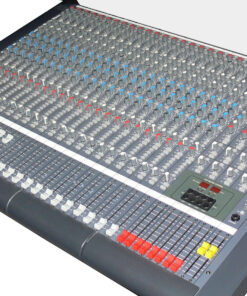
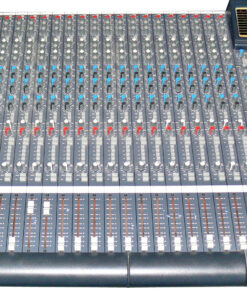
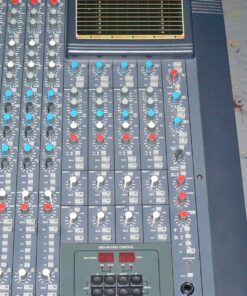
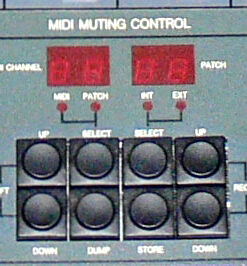
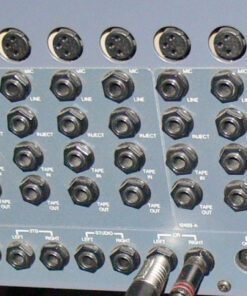
Pre-Owned Soundtracs Solo MIDI 24 channel In Line mixer with 48 line inputs plus 4 stereo FX returns, each channel has 2 signal paths, mic or line plus monitor input for the DAW or other recorder returns, the secondary input can also be used to introduce other audio signals into the mix if all the mic/line inputs are being used. All inputs ( individually or in groups ) can be muted using Note on Note off information provided by a DAW or a midi sequencer. There are 100 Midi Groups allowing the programming of banks of channels to be muted or tuned on automatically
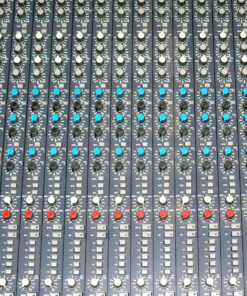
Each channel is equipped with 4 band EQ with fixed Hi & Lo Shelving and 2 swept mids, the EQ can be split between the 2 signal paths with the shelving on one signal path and the Mids on the other, there are also 6 aux sends which can be shared between both signal paths.
There are channel direct outputs plus 8 group outputs plus stereo mix out and control room and studio monitor sends plus outputs to 2 master stereo recorders.
All in all this is a well equipped mixer that has facilities you would expect to find on a much more expensive studio mixer.
*** PLEASE NOTE THAT DUE TO THE SIZE AND WEIGHT THIS ITEM IS A COLLECTION FROM STORE ONLY ***
PLEASE NOTE: SPARES OR REPAIR ONLY
This Pre-Owned Soundtracs Solo MIDI is an analogue mixing console that gained popularity in the early 1990s, particularly in project studios and for live sound applications. Here’s a breakdown of what made this console notable:
Key Features and Characteristics:
- In-line Design: A significant feature was its in-line channel architecture. This meant each channel strip had both a main signal path (for recording) and a monitor signal path (for playback/monitoring). This design effectively doubled the input capacity during mixdown, as you could use both paths. For example, a 24-channel Solo MIDI could handle up to 48 inputs during mixing.
- MIDI Muting: As the name suggests, the console incorporated MIDI-controlled muting. This allowed users to automate mutes of individual channels or groups of channels via MIDI messages from a sequencer or DAW. This was an advanced feature for its time and offered a degree of automation not commonly found on consoles in its price range. Some models had the capacity for 100 MIDI mute groups.
- EQ: Each channel typically featured a 4-band EQ with fixed high and low shelving and two swept mid bands. A notable feature was the ability to split the EQ, assigning the shelving to one signal path and the mid-bands to the other, offering flexibility in shaping the sound for both recording and monitoring.
- Aux Sends: The Solo MIDI consoles were equipped with a generous number of auxiliary sends (typically 6), which could often be switched between pre-fader and post-fader operation, and sometimes could be sourced from either the main or monitor signal paths. This provided ample options for effects sends and monitor mixes.
- Bussing and Routing: They typically featured 8 group buses, in addition to the main stereo mix. Channels could be routed to these groups, and the pan control was often used to assign the signal to odd or even numbered buses. Direct outputs from each channel were also a common feature, useful for multitrack recording.
- Stereo Returns: The consoles usually had multiple stereo returns (typically 4), which could be routed to the main mix or the group buses, providing flexibility for integrating external effects and stereo sources.
- Build Quality: Soundtracs consoles from this era were generally regarded as well-built and reliable, often described as “rock solid.” The Solo MIDI featured a modular design, allowing individual channel strips to be removed for servicing.
- Sound Character: Many users describe the Solo MIDI as having a warm, “analogue” sound with a particularly punchy bass response. The EQ was often praised for its musicality and effectiveness
- High input count at mixdown due to inline design.
- Useful MIDI muting automation.
- Flexible EQ with split capability.
- Generous auxiliary sends and stereo returns.
- Robust build quality.
- Warm, analog sound with good EQ.
- Direct outputs on each channel
Legacy and Current Use:
While no longer in production, Soundtracs Solo MIDI consoles are often appreciated for their sound quality, routing flexibility, and the unique MIDI muting feature, especially for those seeking an analogue workflow without the high cost of more advanced automated consoles. They can be a good option for project studios, smaller recording facilities, or even for live sound.
*** PLEASE NOTE THAT DUE TO THE SIZE AND WEIGHT THIS ITEM IS A COLLECTION FROM STORE ONLY ***
CALL OR EMAIL US FOR PRICE
Related products
Pre-Owned
Pre-Owned